Low back spasms are one of the most common musculoskeletal complaints. Many people experience a sudden tightening or locking sensation in the lower back that can make simple movements like standing, bending, or walking extremely uncomfortable.
While these spasms are often blamed on “pulled muscles” or general back strain, the real culprit is frequently a small but critically important stabilizing muscle in the spine: the multifidus.
⸻
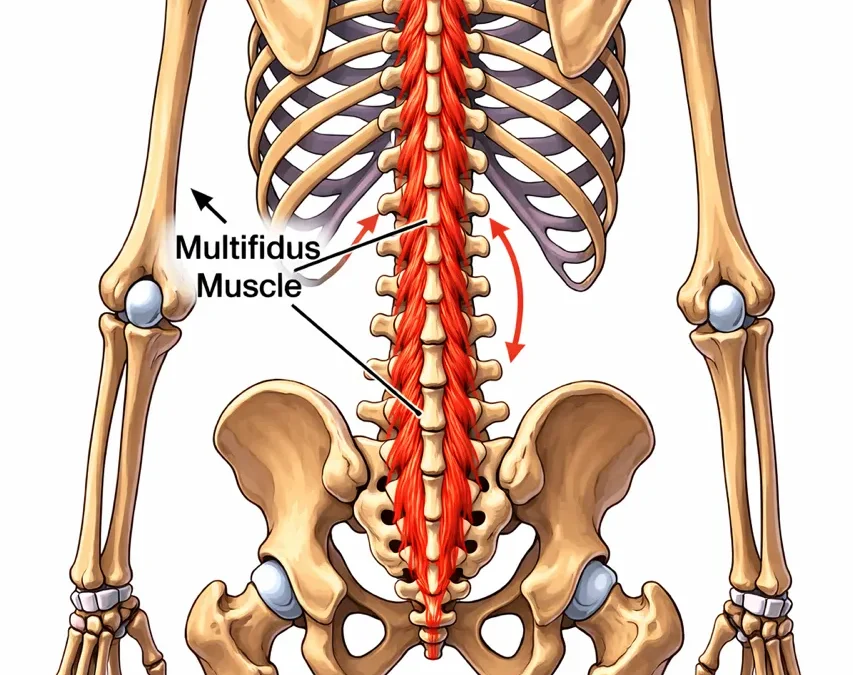
What Is the Multifidus?
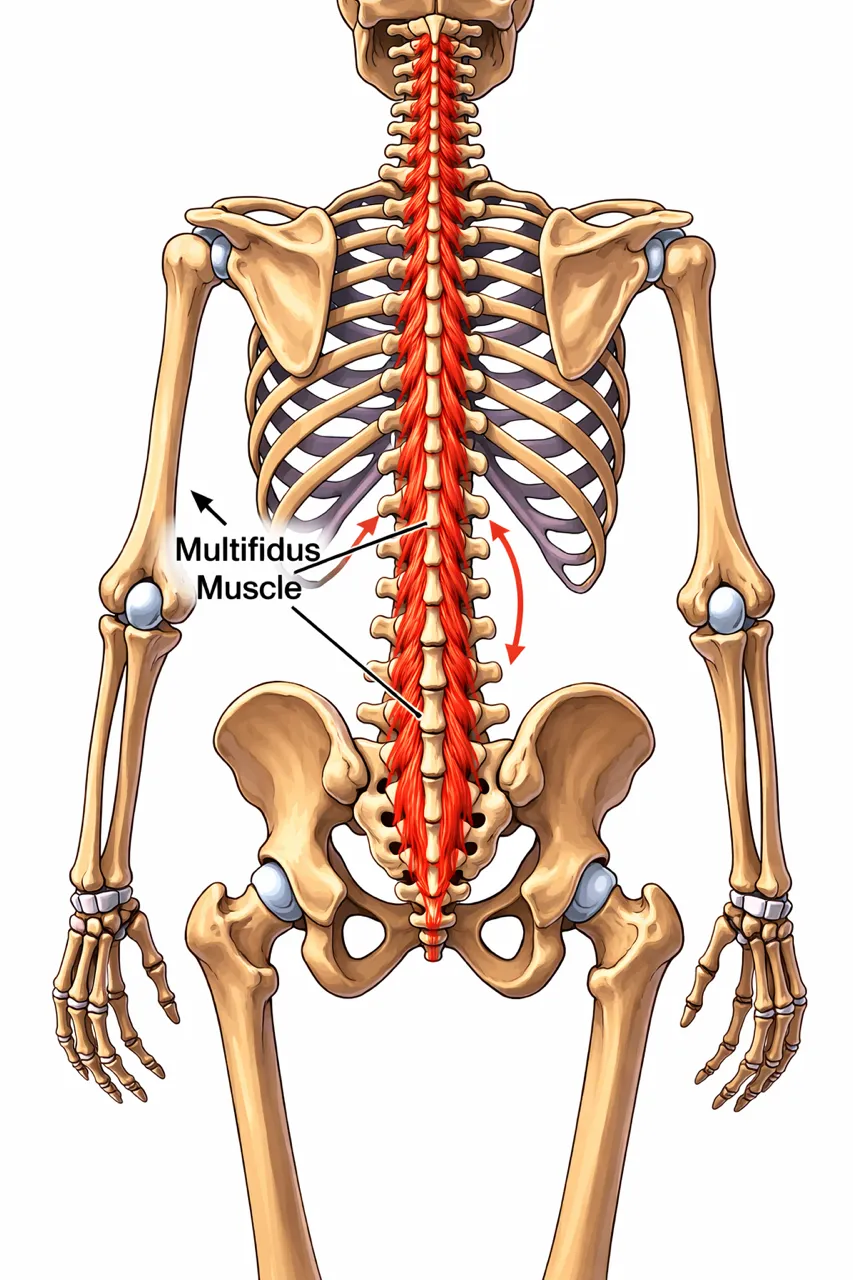
The multifidus is a deep spinal stabilizing muscle that runs along the entire vertebral column, with its strongest and most important role in the lumbar spine.
Unlike larger back muscles that generate movement, the multifidus serves a different purpose:
- Stabilizing each vertebra
- Controlling micro-movements of the spine
- Maintaining segmental alignment
- Supporting spinal integrity during movement
Think of it as the fine-tuning stabilizer of the spine, helping each vertebra stay properly aligned as the body moves.
Why the Multifidus Goes Into Spasm
When the spine experiences instability or excessive strain, the multifidus reacts quickly to protect the area.
Common triggers include:
- Sudden twisting or bending
- Lifting improperly
- Poor posture over time
- Weak core stabilization
- Disc irritation or joint stress
When the spine senses instability, the nervous system signals the multifidus to contract forcefully in a protective response.
This contraction can become sustained, creating what we feel as a low back spasm.
A Protective Mechanism
Although painful, a multifidus spasm is actually the body’s protective mechanism.
The muscle tightens to:
- Prevent further movement of the irritated segment
- Protect the spinal joints and discs
- Stabilize the area while tissues calm down
In essence, the body is saying:
“Stop moving this segment until it’s safe again.”
Why Low Back Spasms Feel So Intense
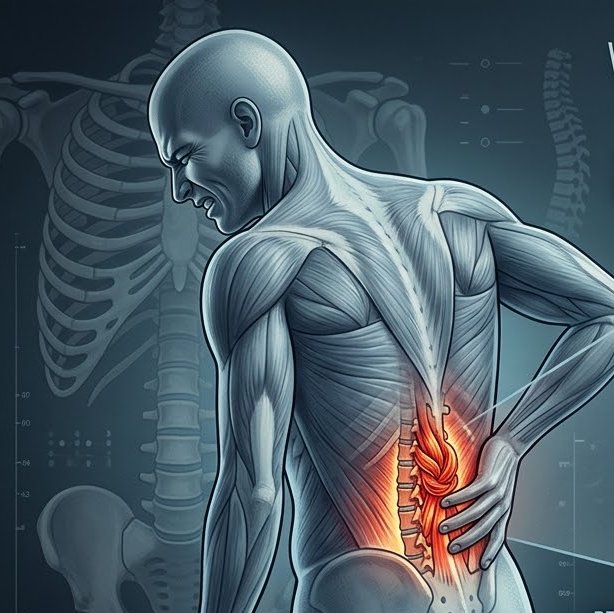
Because the multifidus attaches directly from one vertebra to another, its contraction can make the spine feel locked or stuck.
This is why people often report:
- Sudden sharp pain in the lower back
- Difficulty straightening up
- Guarding when attempting to move
- Feeling like the back “went out”
The muscle is working overtime to protect the spinal segment.
Restoring Function
Addressing low back spasms often involves restoring proper stability and movement patterns rather than simply suppressing pain.
Key goals include:
- reducing protective tension
- restoring spinal mobility
- improving deep core stability
- reactivating proper movement patterns
When the surrounding muscles support the spine effectively, the multifidus can return to its role as a subtle stabilizer rather than a reactive protector.
At Posture Lab LA, we focus on identifying the underlying movement patterns that lead to spinal overload. When structure and stability return, the spine can function the way it was designed to, with strength, balance, and resilience.
Live long. Live well.