How Chronic Stress Leads to Pain and Inflammation
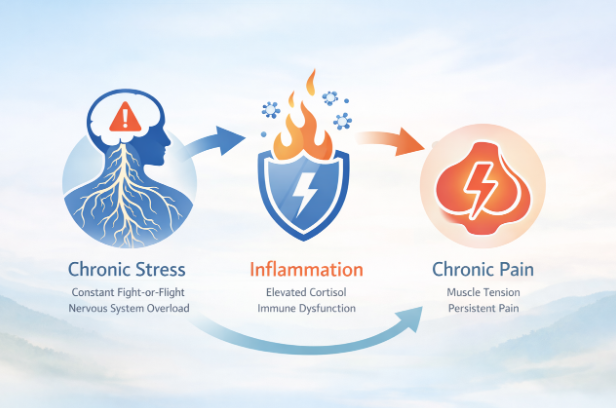
The human body was designed with an incredible survival system called the stress response, also known as the fight-or-flight response. This system helps us react quickly to danger by releasing stress hormones such as adrenaline and cortisol.
In short bursts, this response is helpful. It increases alertness, boosts strength, and redirects blood flow to muscles so we can react quickly.
But the problem today is that the stress response rarely turns off.
Modern life exposes us to constant triggers — work pressure, lack of sleep, emotional stress, poor breathing habits, and sedentary lifestyles. When the body remains in a chronic stress state, the nervous system stays locked in high alert.
Over time, this creates real physical consequences.
⸻
- Muscle Guarding and Chronic Tension
When the brain perceives stress, it increases muscle tone to protect the body. This protective tightening is useful during short-term danger.
But when stress becomes chronic, muscles remain partially contracted all day long.
This constant guarding can lead to:
- Neck and shoulder tightness
- Jaw tension
- Low back pain
- Hip stiffness
- Headaches
Over time, these muscles fatigue and lose proper function, leading to imbalances and structural strain.
- Increased Inflammation
Chronic stress keeps cortisol levels elevated. While cortisol initially reduces inflammation, long-term exposure actually disrupts immune regulation.
The result is a body that becomes more prone to:
Chronic inflammation
Joint pain
Slower tissue repair
Increased injury risk
Inflammation is one of the main drivers behind persistent pain syndromes.
⸻
- Reduced Oxygen and Poor Breathing
Stress often leads to shallow chest breathing rather than deep diaphragmatic breathing.
This limits oxygen delivery throughout the body and creates several problems:
- Reduced cellular repair
- Increased fatigue
- Poor sleep quality
- Slower recovery from physical activity
At Posture Lab LA, we often see that dysfunctional breathing patterns are a major contributor to chronic pain.
⸻
- Nervous System Overload
When the nervous system remains in a constant state of alert, it becomes hypersensitive.
This means the brain begins to interpret normal signals as pain.
This phenomenon is known as central sensitization, and it plays a major role in conditions such as:
Chronic back pain
Fibromyalgia
Persistent muscle tightness
Stress-induced headaches

Restoring Balance
The solution is not simply “reducing stress.”
The key is retraining the nervous system and restoring structural balance.
At Posture Lab LA, we focus on approaches that help calm the stress response and restore proper function, including:
- Structural Exercise Therapy (S.E.T. Method)
- Breathing / diaphragm activation
- Posture Reset
- Neuro-fascia Massage
- Contrast Therapy ( hot & cold therapy)
When the body feels stable and supported, the nervous system can finally shift out of survival mode.
That’s when true healing begins.
The body heals best when it feels safe.
Posture Lab LA
Live Long. Live Well.