There’s a growing focus on the jaw and tongue, but the real insight is this:
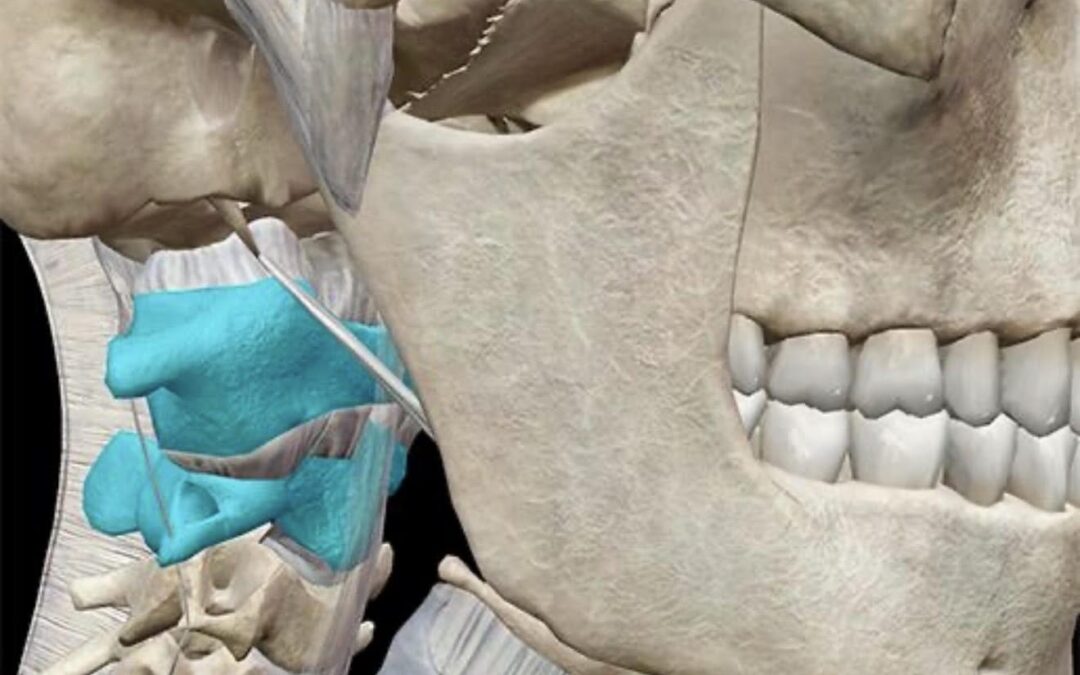
The jaw, tongue, and upper cervical spine (C1–C2) function as one integrated system for posture, breathing, and nervous system regulation.
The Atlas (C1 vertebra) supports the skull, and the jaw sits on that same structure.
- If C1 shifts → the skull adapts → the jaw compensates
- If the jaw is tense → it feeds back into the neck
- This is why jaw tightness and upper neck stiffness often show up together.
The Axis (C2 vertebra) controls head rotation. The tongue connects indirectly through the hyoid system.
- Tongue → hyoid → cervical spine (C1–C3)
- Changes in tongue tension can influence neck tension
- It’s not a direct attachment—but a strong functional link.
Why This Matters
This system helps regulate:
Breathing:
airway and diaphragm coordination
Nervous system:
stress vs relaxation balance
The Real Takeaway
The jaw and C1 are mechanically linked.
The tongue and C2 are functionally connected.
When this system is balanced:
- Jaw relaxes
- Tongue rests naturally
- Neck tension decreases
- Breathing improves
When it’s not: Compensation patterns take over
Final Thought
You don’t need to force alignment, you need to restore communication.
When the jaw, tongue, and upper cervical spine start working together again, the body reorganizes naturally.