Jaw release and tongue work have become increasingly popular recently.
You’ve probably seen techniques circulating online; quick fixes, exaggerated claims, and “one drill solves everything” approaches.
While some of these methods can feel helpful, many fall into the category of fads oversimplified solutions without a clear understanding of the underlying physiology.
So let’s break it down:
What’s actually happening in the body?
And what does the real science support?
⸻
The Nervous System Comes First
At the core of all of this is the nervous system.
Your body is constantly scanning for one thing:
Am I safe or not?
When the system perceives stress—physical, emotional, or environmental—it shifts into a sympathetic (fight-or-flight) state.
When it perceives safety, it shifts into a parasympathetic state, where you can:
Rest
Digest
Repair
Recover
Posture Lab LA refers to this as the Four S’s:
Safety
Security
Support
Stability
Without these, the body will continue to operate in a stress loop—regardless of how much stretching or mobility work you do.
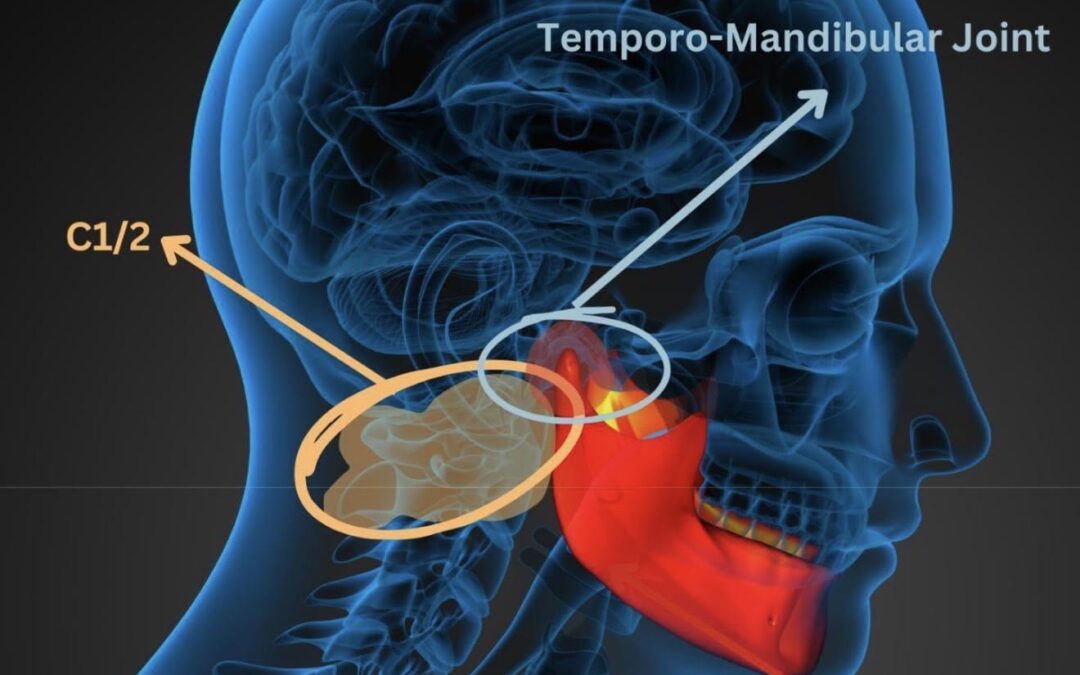
The Jaw: A Stress Indicator and Regulator
One of the first places stress shows up is the jaw.
Clenching, grinding, or subtle tension in the jaw is a direct reflection of a heightened nervous system state. This is not random, it’s a protective pattern.
Here’s where the science matters:
The jaw is closely linked to cranial nerve activity, particularly the trigeminal nerve, which has direct connections to the brainstem and plays a role in sensory input, motor control, and autonomic regulation.
When the jaw remains tight, it continuously reinforces a signal of alertness or threat.
Even if the original stressor is gone, the body can stay stuck in that loop.
By releasing tension in the jaw, we help interrupt that pattern and send a new message to the system:
You are safe.
The Tongue: The Overlooked Player
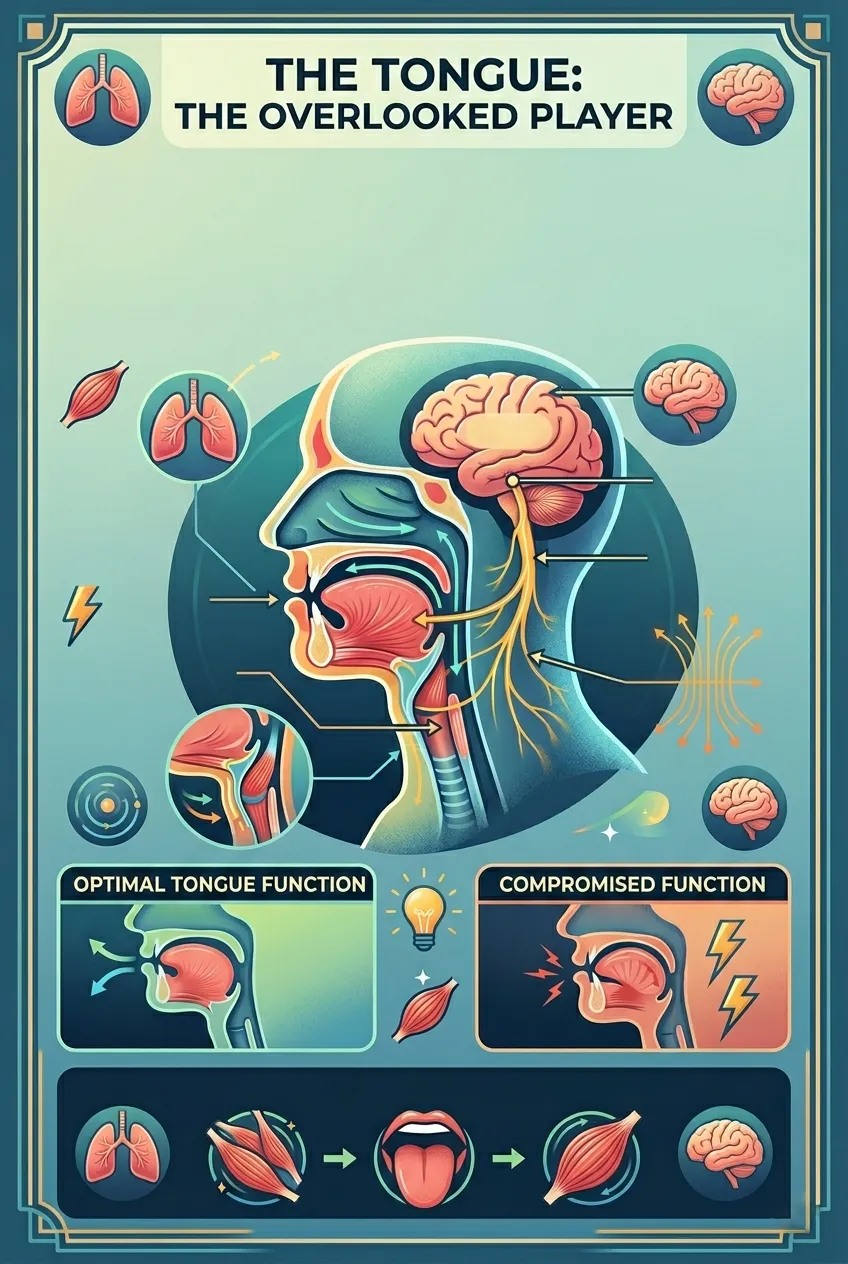
The tongue is one of the most underappreciated contributors to both breathing and nervous system function.
It plays a key role in:
- Airway positioning
- Swallowing mechanics
- Neuromuscular coordination
The tongue is innervated by multiple cranial nerves, including the hypoglossal nerve, which connects directly to the brain.
When the tongue is tense, restricted, or poorly positioned, it can:
- Compromise breathing efficiency
- Contribute to airway instability
- Reinforce stress patterns in the system
This is why simply “stretching the tongue” without understanding its role can miss the point.
The goal is not just release, it’s coordination and function.
Diaphragm Activation: Where Most People Get It Wrong
Breathing is often talked about, but rarely understood correctly.
Most people are not using their diaphragm effectively.
Instead, they rely on the chest, shoulders, and neck, accessory muscles that are meant to assist, not lead.
This pattern:
- Keeps breathing shallow
- Increases respiratory rate
- Reinforces a low-level stress response
From a physiological standpoint, breathing directly influences the autonomic nervous system.
Slow, diaphragmatic breathing:
- Enhances vagal tone
- Supports parasympathetic activation
- Improves gas exchange efficiency
Diaphragm Activation is about restoring this natural mechanism.
Not forcing breath.
Not over-breathing.
But re-establishing a pattern where the body can breathe efficiently—automatically.
Why These Three Work Together
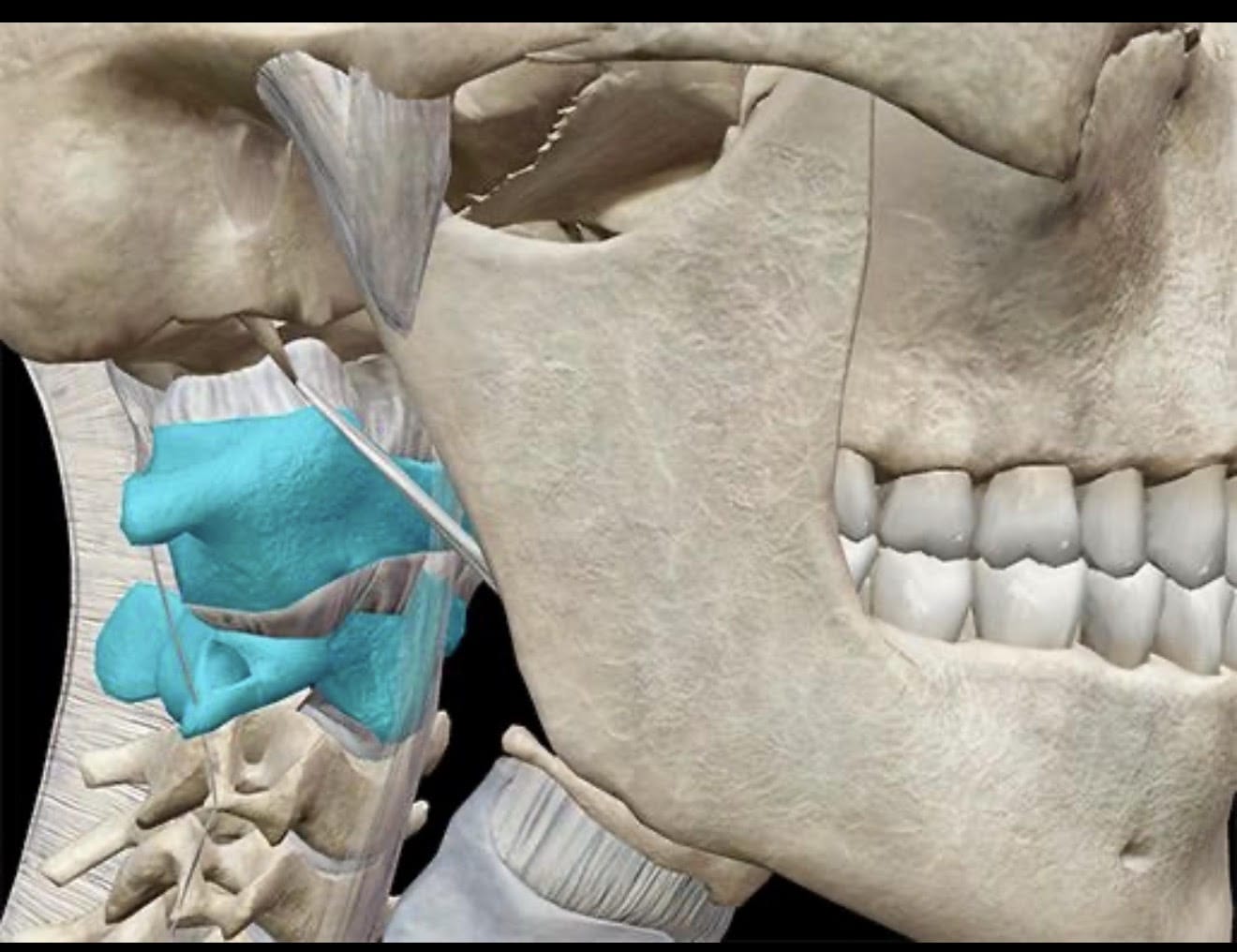
When approached correctly, jaw release, tongue function, and diaphragm activation are not separate techniques.
They are part of a connected system.
- The jaw influences cranial nerve input
- The tongue affects airway and coordination
- The diaphragm regulates breathing and internal pressure
Together, they create a powerful pathway to influence the nervous system.
Real Results vs. Temporary Relief
Fad approaches often focus on sensation:
- Quick releases
- Emotional spikes
- Temporary changes
But true regulation is not about intensity, it’s about consistency and integration.
When the nervous system actually shifts:
- Tension reduces naturally
- Breathing improves without effort
- Movement becomes more efficient
- The body feels calmer and more stable
⸻
Final Thought
Jaw release and tongue work are not trends, they are entry points into something much deeper.
But without understanding the nervous system, they become just another temporary fix.
When applied correctly, they do something far more powerful:
They help the body exit the stress loop
and return to its natural state:
regulated, efficient, and resilient.