Shoulder pain is one of the most common complaints we see at Posture Lab LA. Many people immediately assume the shoulder itself is the problem. However, in many cases, the issue lies in the rotator cuff — a group of small but extremely important muscles responsible for stabilizing the shoulder joint.
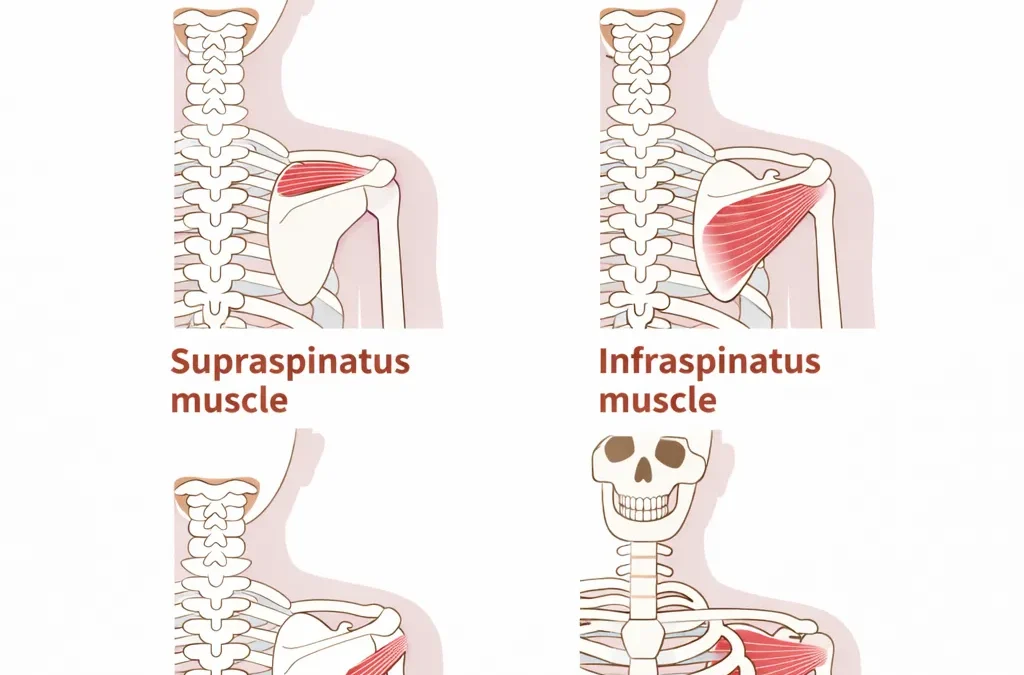
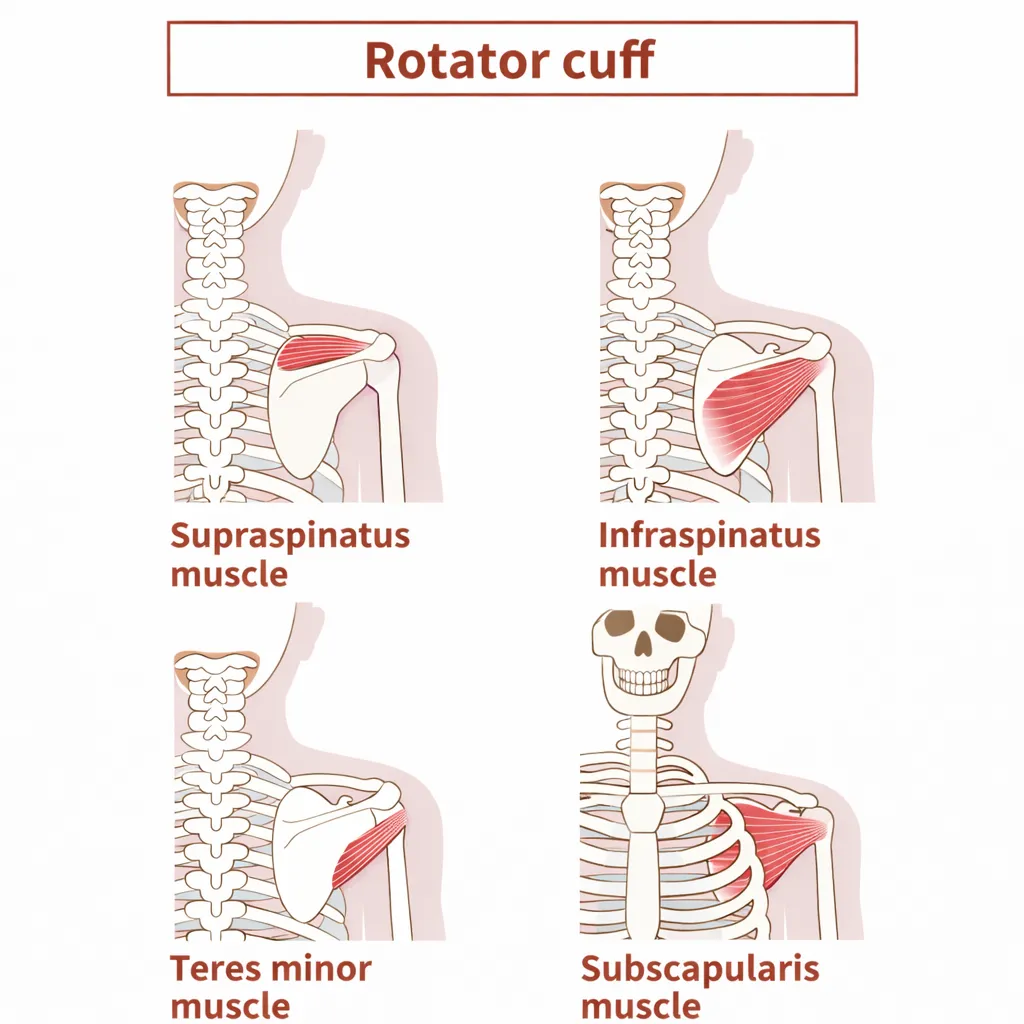
The rotator cuff consists of four muscles:
Supraspinatus
Infraspinatus
Teres Minor
Subscapularis
Together, these muscles act like dynamic stabilizers, keeping the head of the humerus centered inside the shoulder socket while the larger muscles move the arm.
Why Rotator Cuff Pain Happens
Rotator cuff pain rarely occurs from a single event. Most often it develops from repetitive overload or poor mechanics over time.
Common causes include:
- Rounded shoulder posture
- Overhead repetitive movements
- Weak scapular stabilizers
- Poor thoracic spine mobility
- Excessive chest and front shoulder tightness
When posture collapses forward, the shoulder joint narrows its available space. This can lead to impingement, where tendons become compressed under the acromion.
Symptoms of Rotator Cuff Irritation
People often describe rotator cuff issues as:
- Pain lifting the arm overhead
- Weakness when reaching or rotating the arm
- Pain when sleeping on the shoulder
- Clicking or catching sensations
- A deep ache on the outside of the shoulder
In early stages, the pain may only appear with certain movements. Over time, however, it can become constant or inflammatory if the root mechanics are not addressed.
Why Posture Matters
At Posture Lab LA, we rarely treat the shoulder in isolation.
The shoulder depends heavily on the position of the:
Rib cage
Thoracic spine
Scapula (shoulder blade)
Neck posture
When posture improves and the scapula moves properly along the rib cage, the rotator cuff muscles can do their job efficiently without being overloaded.
A Smarter Approach to Shoulder Pain
Instead of only strengthening the rotator cuff, the real solution often involves restoring the entire structural chain.
Key steps include:
- Improving thoracic spine mobility
- Restoring scapular mechanics
- Reducing excessive chest tightness
- Strengthening the rotator cuff in controlled ranges
- Correcting posture alignment
When the shoulder blade moves correctly and the joint stays centered, the rotator cuff can function as it was designed — providing stability, not fighting constant stress.
Prevention Is Always Better
Rotator cuff injuries are extremely common, especially as people age. But many cases can be prevented with proper structural care.
At Posture Lab LA, we focus on preventative alignment and structural training, helping people restore healthy movement patterns before pain becomes chronic.
Because when the foundation of the shoulder is stable, movement becomes smooth, strong, and pain-free.
Live long. Live well.