Posture Performance Training in Santa Monica
The phase after Posture Reset™. We measure the strength of your individual muscle groups, compare them to the Posture Strength Baseline, and build a customized program that develops strength with purpose — for posture, mobility, and the body you want at 70, 80 and beyond.
Strength should be measured before it's loaded.
Most training begins with exercises, sets, reps and an estimated load. That's guesswork — and guesswork is how people build strength on top of the imbalances that were causing the problem in the first place.
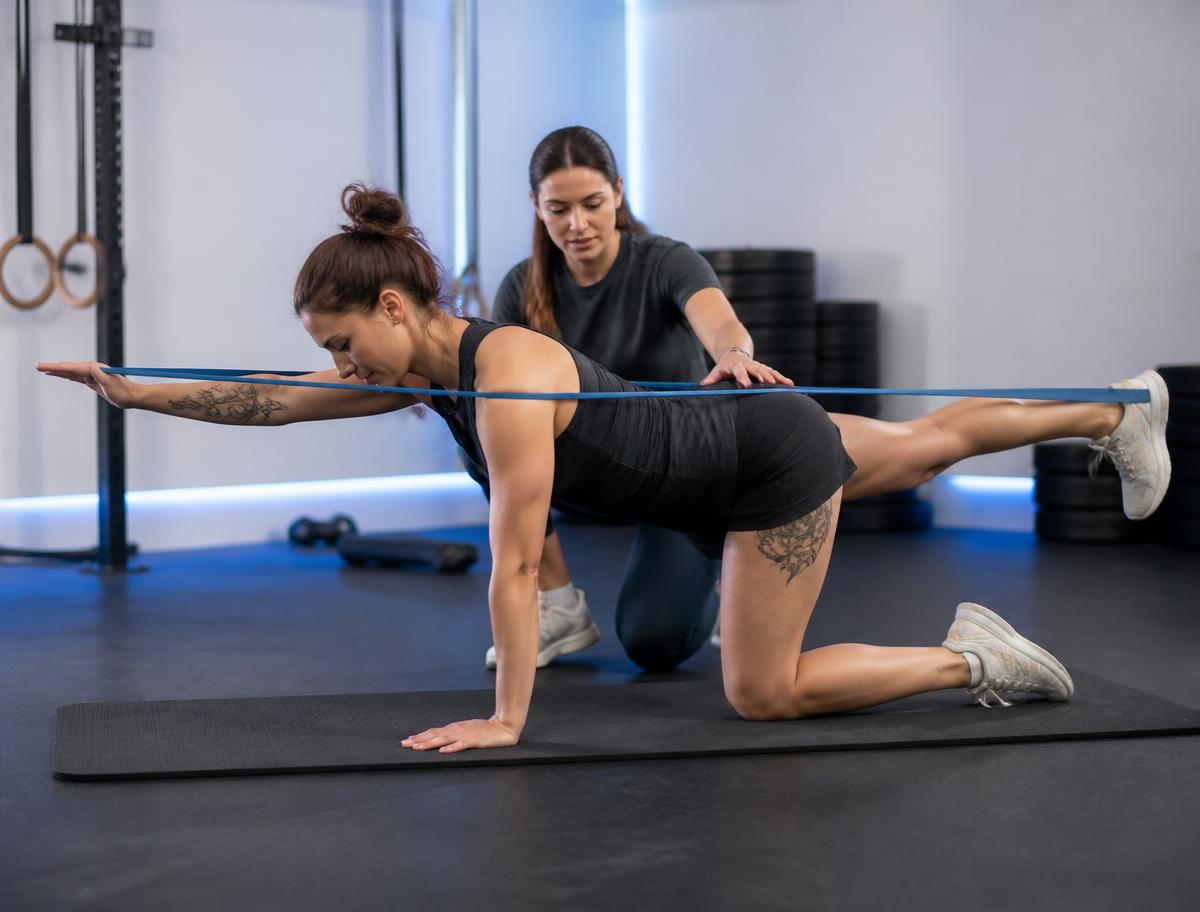
Posture Performance Training begins with objective measurement. We test the strength capabilities of multiple major muscle groups individually, then use those numbers to decide how much resistance is appropriate, where strength is missing, and how your program should progress.
What is Posture Performance Training?
Posture Performance Training is the next phase after the Posture Reset™ process. Once we've improved alignment and reduced the primary tension patterns influencing your posture and movement, the goal becomes building strength underneath that improved foundation.
The program is customized around your individual strength capabilities and designed to develop balanced, useful strength that supports posture, upright movement, mobility, flexibility, and long-term physical resilience. The goal isn't simply to make you stronger — it's to build strength with purpose, so your body is prepared for the demands of your life and can keep performing as you age.

Real change you can feel — and keep.
Objective numbers in, intelligent training out.
Your strength story
Individual muscle-group measurements show where you're strong, where you're behind, and where imbalances exist — not just how much weight you can move.
The Posture Strength Baseline
Benchmarks for where each muscle group should be relative to body weight and functional demand, then raised to match your lifestyle.
Right-sized resistance
Measured capability sets the load — enough stimulus to create adaptation, without unnecessary wear and tear.
Mobility preserved
Strength should make you more capable, not more rigid. Range of motion, mobility and flexibility are protected as strength rises.
Built for longevity
Programming aimed at the capacity you need today and the body you want decades from now.
Retesting every 3–4 months
Progress becomes measurable: repeat the assessment, compare results, update targets, customize the next phase.
What Posture Performance Training is used for
Everyday function & healthy aging
Building the strength required to stay capable and independent for the long term.
Holding your posture correction
Strength underneath the alignment gained in Posture Reset™ so the change holds under real load.
Recreational performance
Pickleball, surfing, running, lifting — targets set by the demands you actually put on your body.
Closing measurable gaps
Imbalances and lagging muscle groups identified by testing, trained directly rather than trained around.
How Posture Performance Training works
Test
Your first session is primarily strength testing. We measure multiple major muscle groups individually to build your strength story — an objective picture of your current capabilities.
Target
We compare your measurements against the Posture Strength Baseline and your lifestyle demands to establish where your body should be, and the gap we need to close.
Train & retest
A customized program built on those numbers, using tools and movement strategies chosen to support posture and movement quality — then retested every three to four months so the program evolves with you.
Who Posture Performance Training is for
Anyone who wants strength built on measurement rather than assumption.
Posture Reset™ graduates
Ready to build strength underneath the alignment they've earned.
Longevity-minded clients
Training as a long-term investment in staying capable and independent.
Recreational athletes
Pickleball, tennis, surfing, running — capable without unnecessary wear.
Anyone tired of guesswork
Programs that start from numbers instead of a template or how heavy it feels that day.
The long-term question isn't “how much can you lift today?” It's “how capable do we want your body to remain at 70, 80, and beyond?”
Why train at Joe's Posture Reset
Measurement first
We know your capabilities before we decide how to load you — resistance is chosen from data, not estimation.
Longevity lens
Strength and muscle built productively, while supporting movement quality and reducing unnecessary wear and tear.
A complete system
Pairs with Posture Reset™, Neuro-Fascia Massage™ and our Recovery Rooms — all under one Santa Monica roof.
Practitioner-led
Real, credentialed coaching, with a strong internal safety record built on assessment, appropriate loading and progression.
How it fits with Posture Reset™
Think of it as correct, then build. Posture Reset™ improves alignment and reduces the tension patterns driving your pain. Posture Performance Training then builds measured strength on that foundation so it holds. Many clients pair both with Neuro-Fascia Massage™ and our Recovery Rooms. Going deeper: the science behind why posture degrades.
Posture Performance Training FAQ
Build strength you can measure.
Start with a strength assessment, see your strength story, and train toward targets built for your life — not a template.
Strength that actually protects you
All articlesAnterior Pelvic Tilt: Causes, Symptoms & How to Correct It
Anterior pelvic tilt (APT) drives low-back pain, tight hip flexors, and weak glutes. Here's what causes it, how to spot it, and how we correct it structurally at Joe's Posture Reset in Santa Monica.
Read article5 Common Causes of Back Pain
Back pain is totally preventable if you understand how your lifestyle and daily choices are affecting your body. While there are many advantages to modern culture, a healthy back is not one of them. From sitting at a des…
Read articleUnderstanding Low Back Spasms: The Crucial Role of the Multifidus Muscle
Low back spasms are one of the most common musculoskeletal complaints. Many people experience a sudden tightening or locking sensation in the lower back that can make simple movements like standing, bending, or walking e…
Read articleRotator Cuff Shoulder Pain: When Stability Muscles Get Overworked
Shoulder pain is one of the most common complaints we see at Joe's Posture Reset . Many people immediately assume the shoulder itself is the problem. However, in many cases, the issue lies in the rotator cuff — a group of sma…
Read articleWhat is the best way to workout?
We all understand the benefits of exercise, especially in our ability to sustain our health and quality of life as we age – but do you know the best workout program for you? With so many trends, opinions, influencers, an…
Read article3 exercises to stop doing immediately
Exercise is an essential part of a healthy lifestyle, but some exercises may cause more harm than good. Inappropriate firing patterns, compression, loss of range of motion, and long-term injuries are some of the issues t…
Read article