Infrared Sauna vs. Regular Sauna: What's the Difference and Which Is Better for Recovery?
Recovery· 6 min read· August 15, 2026
If you've ever looked into sauna options — for a gym, a wellness studio, or a home setup — you've run into the infrared vs. traditional debate. The terms get thrown around loosely, the marketing claims are often exaggerated on both sides, and it can be hard to figure out what the actual difference is and whether it matters for your specific goals.
It does matter. Especially for recovery. Here's a clear breakdown.
How traditional saunas work
Traditional saunas — Finnish dry saunas, steam rooms, or wood-burning saunas — heat the air around you to very high temperatures (typically 170–200°F) and rely on convective and conductive heat transfer to raise your core temperature. You get hot because the air is hot. The ambient temperature is the mechanism.
This produces rapid, intense sweating and a powerful cardiovascular response. Traditional saunas are genuinely effective for relaxation, heat acclimation, and general cardiovascular conditioning. The Finnish research on sauna use and cardiovascular health is impressive and is largely based on traditional dry sauna.
The limitation for recovery-specific use: the very high ambient temperatures can be uncomfortable to sustain for the 15–20 minute rounds needed for a proper contrast therapy protocol, and the convective heat mechanism primarily heats the skin and superficial tissue — it doesn't penetrate deeply into muscle or fascia.
How infrared saunas work
Infrared saunas use infrared light — specifically far-infrared wavelengths — to heat your body directly rather than heating the air around you. The infrared light is absorbed by your tissue, and the heat is generated within your body rather than being transferred from the environment.
This has two practical consequences that matter for recovery:
Lower ambient temperature, deeper tissue penetration. Far-infrared saunas typically operate at 120–160°F — significantly lower than a traditional sauna. Despite this lower ambient temperature, the heat penetrates 1.5–2 inches into muscle and fascial tissue, compared to the more superficial heating of traditional sauna. For recovery purposes, this deeper penetration means you're getting heat into the structures that did the work — the muscle bellies and surrounding fascia — rather than primarily at the surface.
Far-infrared heat penetrates 1.5–2 inches into muscle and fascia. You're not just getting warm — you're getting heat where the work actually happened.
Longer tolerable sessions. The lower ambient temperature means most people can sustain a full 15–20 minute round comfortably, which is the duration needed for the sauna portion of a contrast therapy protocol to be effective. In a traditional sauna at 185°F, many people exit after 8–10 minutes — often not long enough for full vasodilation and tissue softening to occur.
Full-spectrum infrared: what it means
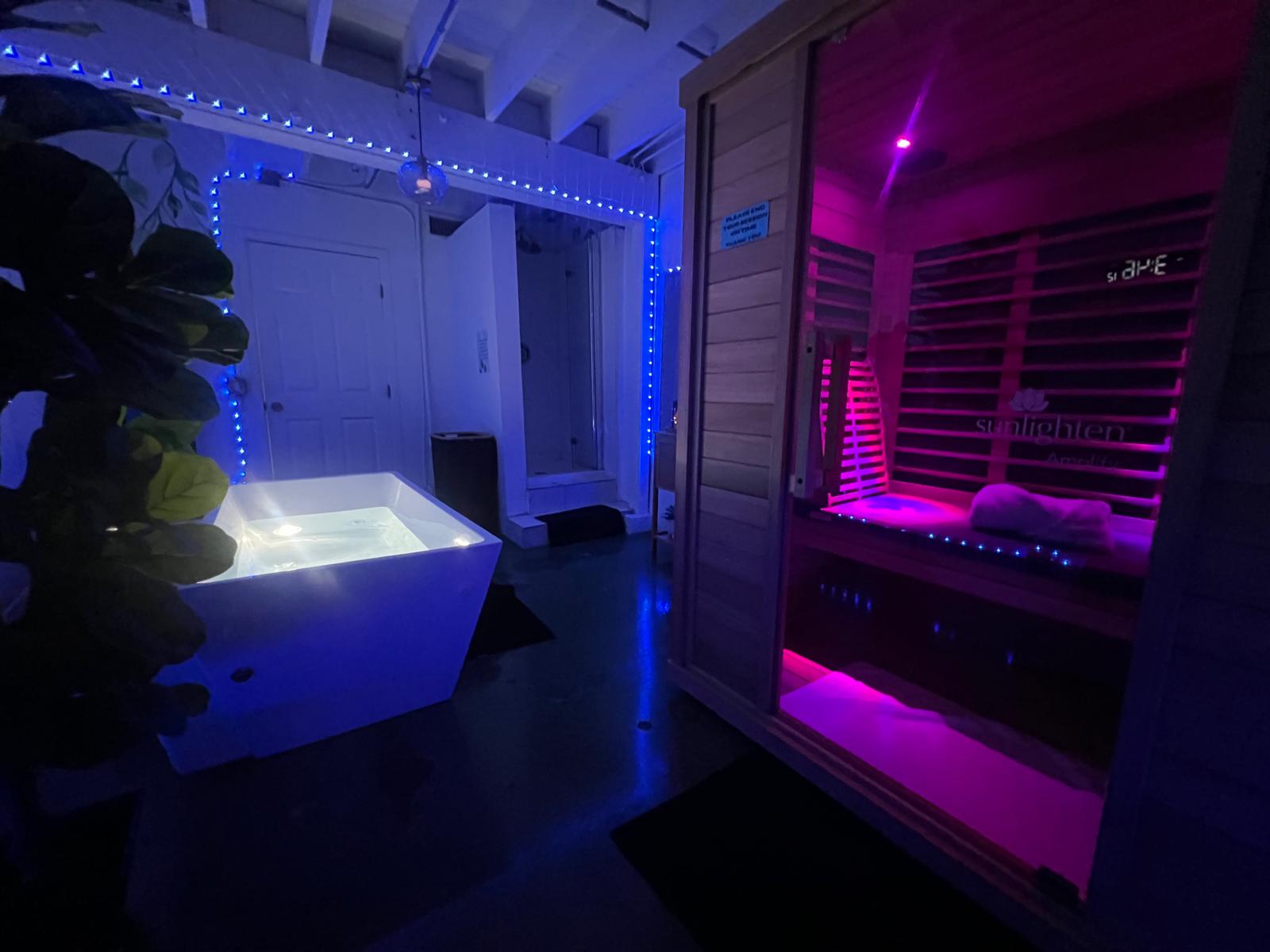
Some infrared saunas — including the Sunlighten units at Joe's Posture Reset — are full-spectrum, meaning they emit near, mid, and far-infrared wavelengths simultaneously.
Near-infrared wavelengths penetrate the shallowest — into the skin and superficial tissue. Research has shown benefits for skin health, wound healing, and cellular energy production via mitochondrial stimulation.
Mid-infrared wavelengths penetrate into soft tissue and are associated with improved circulation and pain reduction.
Far-infrared wavelengths penetrate deepest and are the primary driver of the muscle recovery, fascial release, and cardiovascular benefits in most recovery-focused research.
A full-spectrum unit delivers all three simultaneously, which is why full-spectrum infrared is generally considered the most complete and effective option for recovery applications.
Which is better for post-workout recovery?
For most recovery applications — post-training muscle soreness, fascial tightness, inflammation management, and contrast therapy protocols — infrared sauna has meaningful advantages:
Deeper muscle and fascia penetration means you're getting heat where it matters most after training.
More comfortable sustained sessions at lower ambient temperatures mean you can complete a full contrast protocol without bailing out early.
Better tolerated by people with heat sensitivity — those who find traditional saunas overwhelming can often do infrared comfortably, which means consistent use.
Compatible with injury recovery — the lower ambient temperature and penetrating heat make infrared a better option for people managing acute or chronic injuries, where the aggressive heat of a traditional sauna may be contraindicated.
For general relaxation, heat acclimation training, and the specific cardiovascular benefits documented in the Finnish sauna research, traditional sauna is a legitimate choice. For post-workout recovery and the contrast therapy protocol specifically, full-spectrum infrared is the better tool.
Experience full-spectrum infrared in Santa Monica. Joe's Posture Reset runs Sunlighten full-spectrum infrared saunas in two fully private suites on Pico Blvd. Sessions from $45 — no shared equipment, no queue.
Book Your SessionWhat to look for in an infrared sauna
Not all infrared saunas are equal, and the market is full of cheap units that don't deliver on their promises. Things to look for:
True full-spectrum emitters. Some units marketed as "full-spectrum" only emit far-infrared. Look for documentation of near, mid, and far emitters.
Low EMF and ELF. Infrared saunas produce electromagnetic fields. Quality units are engineered to minimize these. Sunlighten publishes independently verified EMF and ELF levels and is among the lowest in the industry.
Consistent temperature calibration. The sauna should reach and maintain its target temperature reliably.
Adequate interior space. For post-workout use, you want to be able to move, stretch, and breathe comfortably.
The sauna situation at most Santa Monica gyms
Most gyms in Santa Monica either have no sauna at all, or have a shared dry sauna that becomes a bottleneck during peak hours. Shared saunas present time pressure that works against staying in for 15 minutes and running multiple rounds.
Cold plunge access is even rarer. Some gyms have an ice bath — a shared tub with variable temperature consistency and hygiene.
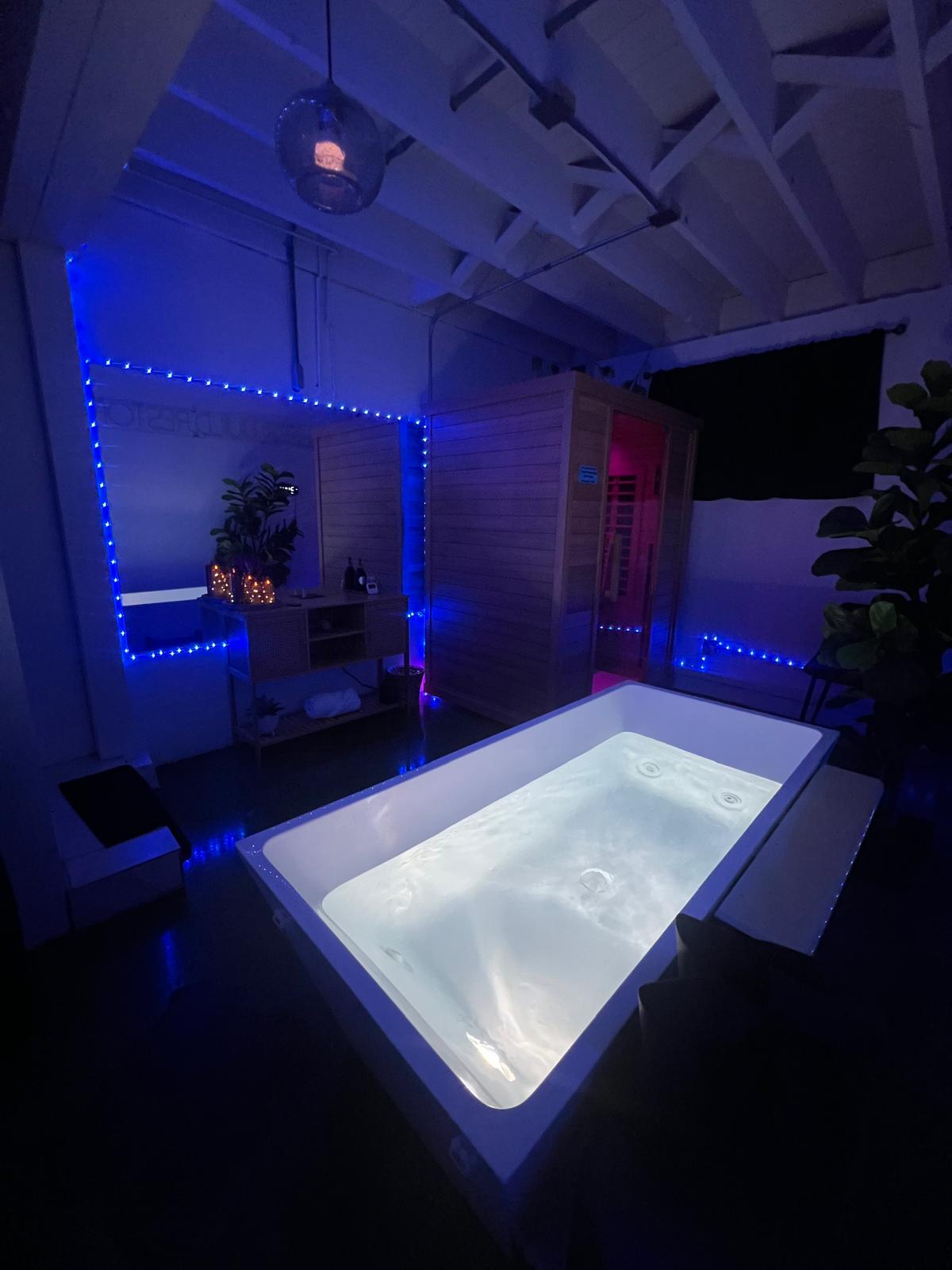
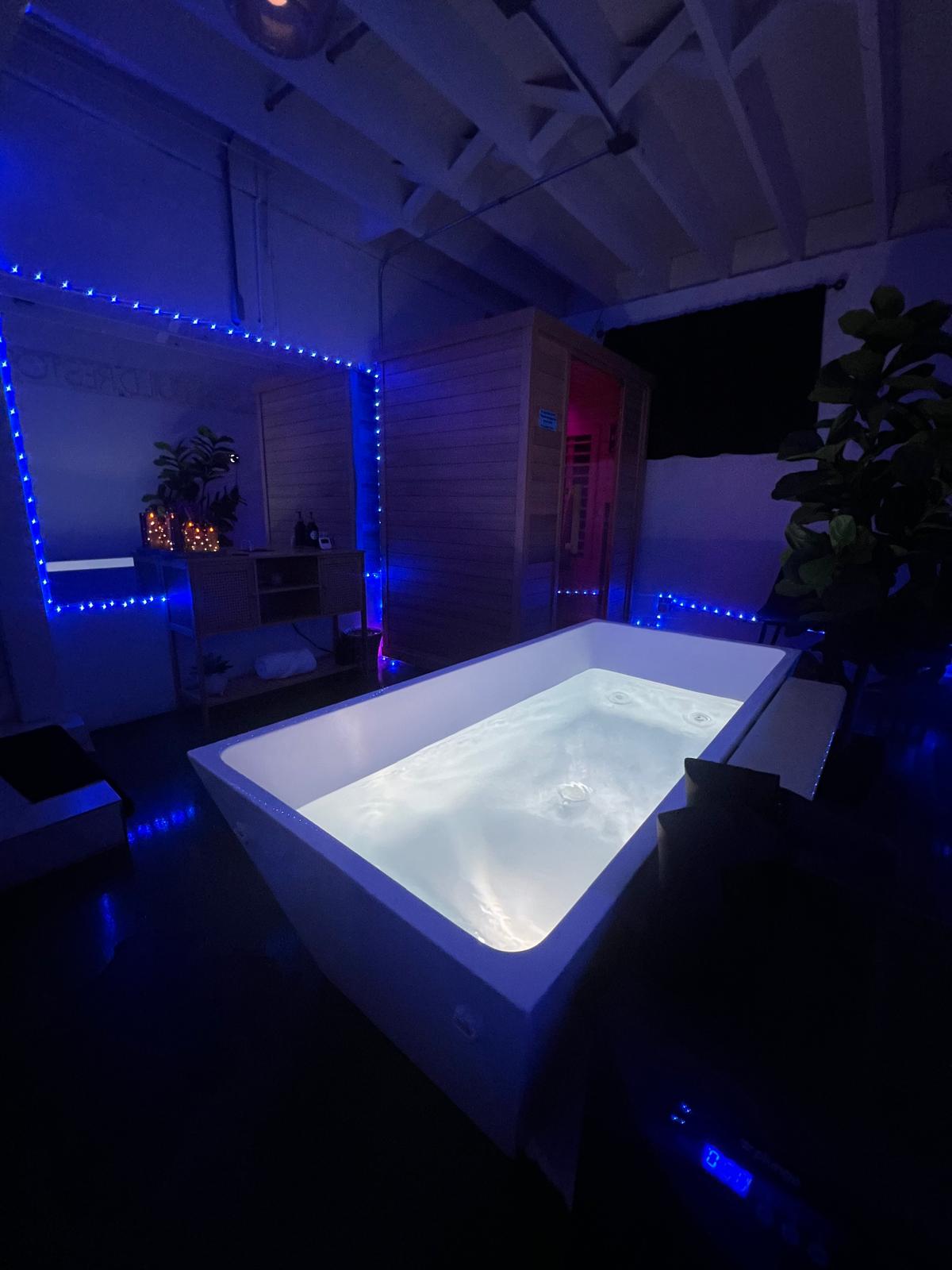
At Joe's Posture Reset, both Recovery Suites are equipped with Sunlighten full-spectrum infrared saunas paired with a private cold plunge, in a fully private room. For people treating recovery as a serious part of their training routine, this setup is significantly more effective than what's available at most gyms.
Single sessions are $45. Monthly memberships start at $125 for four sessions per month.